Content:
1. I plan on completing my 30 hours by working with the camera more, using a tripod for different things and working with studio lights and reflectors.
2. My evidence will be shown through photos that I take or photos of me working with equipment.
3. This will help me explore my topic more in depth by allowing me to stabilize the camera(tripod), work with added light instead of just natural light, and to shape light to fit my needs for a photo.
4. *log on right hand side of blog*
Thursday, February 13, 2014

Thursday, February 6, 2014
Blog 14: Independent Component 1
LITERAL
a) I, Symphony Moreno, affirm that I completed my independent component, which represents 30 hours of work.b) Sources: Renee Moreno, Jack Bohlka, Portrait Lighting - Names for different portrait lighting set-ups in photography (article)
c) Component 1 log is on the right-hand side of the blog
d) What I have completed is portraits of my sister, each one has a different lighting style or composition.
INTERPRETATIVE
The most significant part of this component was the few lighting styles that I learned and a few techniques I learned when adjusting my camera settings ( manual focus, slow shutter speed, wide aperture, ect.,). All of these things are demonstrated in these photos that I took of my sister:

In this photo, I had my sister turn her head slightly towards the light so that we could create the effect of "short lighting" which is where the short side of the face is lit up.

I had my sister turn her head towards the light a little bit more to create a "key triangle" this is on the right side of her face under her eye. The lighting style where the key triangle is shown is known as Rembrandt.

In this final photo I had my sister face me fully while the lighting was farther off to my left so that only half of her face is lit. This is called split lighting.
Before taking any of these photos I had to preset my camera to the conditions of the lighting in the room which was very little, so the settings that I had listed above( slow shutter speed, wide aperture, manual focus, high iso) were used through out. Originally I was going to demonstrate five lighting styles but as I was working out of my home I found that I couldn't fully achieve the other two (broad and butterfly) without them coming out very badly. Here is just some more evidence that I was in ROP working on all of this:

APPLIED
This helped me with the foundations of my project because I realized that photography isn't just snapping photos; you have to really think about what you're doing when pre-setting the camera or setting up the lighting and the room that you're going to shoot in.
Saturday, February 1, 2014
Blog 13: Lesson 2 Reflection
1. Positive Statement:
For my presentation, I am most proud of the demonstrations that I did on the camera to really kind of show what I was talking about.
2. Questions to Consider
a. What assessment yould you give yourself on your Lesson 2 Presentation (self-assessment) ?
P-/AP+
b. Explain why you deserve that grade using evidence from the lesson 2 component contract.
I think I deserve at least one of those because my presentation overall was pretty well-rounded, except I didn't cite my sources.
3. What worked for you in Lesson 2?
Having the cameras for everybody to try and apply what I had just talked about while taking photos.
4. ( What didn't work) If you had a time machine, what would you have done differently to improve your lesson 2?
Some of the cameras either didn't have a battery or were just completely dead, if I could change that it would probably be to make sure that every camera is charged and has a battery before my presentation.
5. Finding Value
What do you think your answer #2 is going to be?
I think my answer #2 would be along the lines of equipment such as, tripods and off-camera flash.
For my presentation, I am most proud of the demonstrations that I did on the camera to really kind of show what I was talking about.
2. Questions to Consider
a. What assessment yould you give yourself on your Lesson 2 Presentation (self-assessment) ?
P-/AP+
b. Explain why you deserve that grade using evidence from the lesson 2 component contract.
I think I deserve at least one of those because my presentation overall was pretty well-rounded, except I didn't cite my sources.
3. What worked for you in Lesson 2?
Having the cameras for everybody to try and apply what I had just talked about while taking photos.
4. ( What didn't work) If you had a time machine, what would you have done differently to improve your lesson 2?
Some of the cameras either didn't have a battery or were just completely dead, if I could change that it would probably be to make sure that every camera is charged and has a battery before my presentation.
5. Finding Value
What do you think your answer #2 is going to be?
I think my answer #2 would be along the lines of equipment such as, tripods and off-camera flash.
January
So this month I spent mostly preparing for my 30 minute presentation. What I did to really prepare was read up on the different camera settings and their uses.

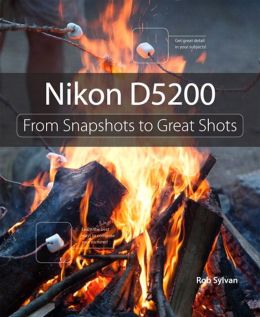
[ This is the book I read to learn the different camera settings among other things.]
Overall I didn't do much other than that except take a really nice photo for ROP when we worked on abstract photography, I'll probably have that up after it's been graded.
Monday, January 20, 2014
Blog 12: Third Interview Questions
Content:
10 open-ended questions:
10 open-ended questions:
- My essential question is " How can a photographer best achieve ideal lighting during a portrait session?", what are your thoughts on getting the best light during a session?
- One of my answers for my essential question is adjusting the camera settings in accordance with given light; How often would you say that you adjust your settings when taking photos?
- In lighting conditions like today, if you had to take an outdoor portrait what settings do you think you would use to get the best lit photo possible?
- In what circumstances would you suggest using an off-camera flash?
- In contrast to that under what circumstances would you suggest using an on camera flash?
- When, in your opinion, would it be more appropriate to use a hot light rather than a studio light with an umbrella reflector?
- Speaking of reflectors, would you suggest a specific type for outdoor portrait sessions?
- Do you use soft boxes in your photography? If so what effect do they have on your photos? If not, why?
- Some photographers use reflector floodlights in their work, what's your opinion on them and their effect on a photo?
- Other photographers have their preferences in lighting styles; short to broad, split to butterfly; what is your preferred lighting style?
Friday, January 10, 2014
Blog 11: Mentorship 10 Hours
1. Where are you doing your mentorship?
I am doing my mentorship at CBC Photography and ROP Digital Photography class.
I am doing my mentorship at CBC Photography and ROP Digital Photography class.
2. Who is your contact?
My contact is Jack Bohlka.
3. How many total hours have you done?
I have done a total of 54 hours.
I have done a total of 54 hours.
4. Summarize the 10 hours of service you did.
The hours that I completed consist of scaning client orders, observing a portrait session, and participating in ROP class.
5. Email your house teacher the name of your contact and their phone number confirming who they are should they call to verify it.
Tuesday, January 7, 2014
Blog 10: Senior Project: The Holiday
Content:
If I were to interview someone in a 10 question interview on questions related to answers related to my EQ, I would talk to Jack Hancock because he does really good photography work where the lighting compliments the subject.
1. It is important to consistently work on your senior project, whether it is break or we are in school. What did you do over the break with your senior project?
Over the break I did some independent research that I think will help me in the 30 minute presentation and my independent component.
2. What was the most important thing you learned from what you did and why? What was the source of what you learned?
In my research I learned about photo exposure and how to get it just right for different situations.
3. If you were going to do a 10 question interview on questions related to answers of your EQ, who would you talk to and why?
If I were to interview someone in a 10 question interview on questions related to answers related to my EQ, I would talk to Jack Hancock because he does really good photography work where the lighting compliments the subject.
Saturday, December 21, 2013
Extra Post December
So In ROP this month, Jack had us take still life photos with a given theme: "iPoly Life". So I decided to head over to the office and take a photo of the excused and unexcused tardy/absence slips because really who at iPoly hasn't had to run over to the office or hasn't been sent back to get a tardy slip.

[ This is the photo I took of mostly excused absence/tardy slips towards
the back where the white slip of paper is an unexcused slip]
That's probably the most interesting thing that I've done this month, hopefully more comes out of the next two weeks.
Saturday, November 30, 2013
November Post
This month I started working in the studio again. I didn't do much just putting things together and helping Jack clean up his office area. Here are some photos of that:


.JPG)
[ This is a photo of all the orders that I had to put together for Claremont High's football team.]
[ This is Jack's office.]
[ This is one of the cupboards that I had to clean out, unfortunately I don't have an after photo.]
Overall, this month was pretty uneventful in terms of work and such, hopefully December is less dull.
Blog 9: EQ
Content
1. Review this. Confirm by stating "I reviewed the rule of three for writing an EQ."
Essential Question
Once a topic is chosen, the student will develop a working essential question. The purpose of the working essential question is to help the student build a strong foundation of research which will allow him or her to create an essential question that encourages depth and rigor in the chosen topic. An essential question must:
- Provide a framework for studies (It calls for breadth and depth of research, Is not a yes/no question)
- Takes a stance (Allows you to argue some point, Cannot be a recitation of facts or a list)
- Format (It is specific, The wording makes sense)
I reviewed the rule of three for writing an EQ.
2. Review the following EQs and
- Tell us if it meets the rule of 3 criteria.
- Tell why it does or why it doesn't
a. What is the most important factor in healthy weight loss?
This EQ does because you can argue what the most important factor in healthy weight loss, you can do in depth research on this and the wording makes sense.
b. What is most important to securing a conviction in a criminal investigation?
I think that this would only lead to one answer.
c. What is most important in creating a hairstyle that best satisfies a customer?
Honestly this seems more like an interview question, rather than a question that would take a lot of research to answer.
d. How can an Anesthesiologist best treat chronic pain?
The question is well formatted and there are definitely different points that this can be argued from and there’s a lot of research that can go into this.
3. Based on your review of the rule of 3 and your experience with assessing four EQs, please write another draft EQ for your senior project.
What is most essential when producing a satisfactory portrait, before and after taking the photo?
Subscribe to:
Posts (Atom)